A good security gate is a quiet coworker. It shows up early, stays late, and doesn’t complain when the weather is nasty. If you run a storefront, a warehouse, or a mixed-use building with a restless alley, the right barrier is more than steel and powder coat. It is policy, deterrence, and peace of mind rolled into a sliding or folding frame.
I install and spec gates for a living. I’ve seen the clever ways thieves test a weak perimeter, the blind spots that get missed during a renovation, and the surprising role a gate plays in day-to-day operations. If you’re considering security gates for business, here is the short version: match the gate style to the risk profile and workflow, obsess over the hardware, and treat installation like a structural job, not a weekend project. The long version follows.
What a security gate actually does, and what it doesn’t
A gate does four jobs at once. It creates a physical delay, it sends a visual signal of control, it channels traffic, and it secures openings without starving a space of airflow or visibility. Accordion security gates and scissor security gates excel at this, because their lattice design lets you see through the barrier while keeping hands, crowbars, and shopping carts out. That visibility matters. Staff can monitor lines of sight, and would‑be intruders know there is no cover to hide their efforts.
What a gate does not do is eliminate risk. Good burglars bring time and tools. Your goal is to deny them the first and make the second noisy and awkward. When a storefront in our portfolio upgraded from a hollow tube gate to a solid core, hinge‑pinned scissor gate with concrete wedge anchors and tamperproof carriage bolts, smash‑and‑grab attempts didn’t vanish, but they lasted less than 40 seconds and ended with frustrated footprints on the glass. The glass survived because the gate took the hit.
Matching gate types to real operations
Not all commercial security gates behave the same, and the right pick depends on how your space breathes during a typical day.
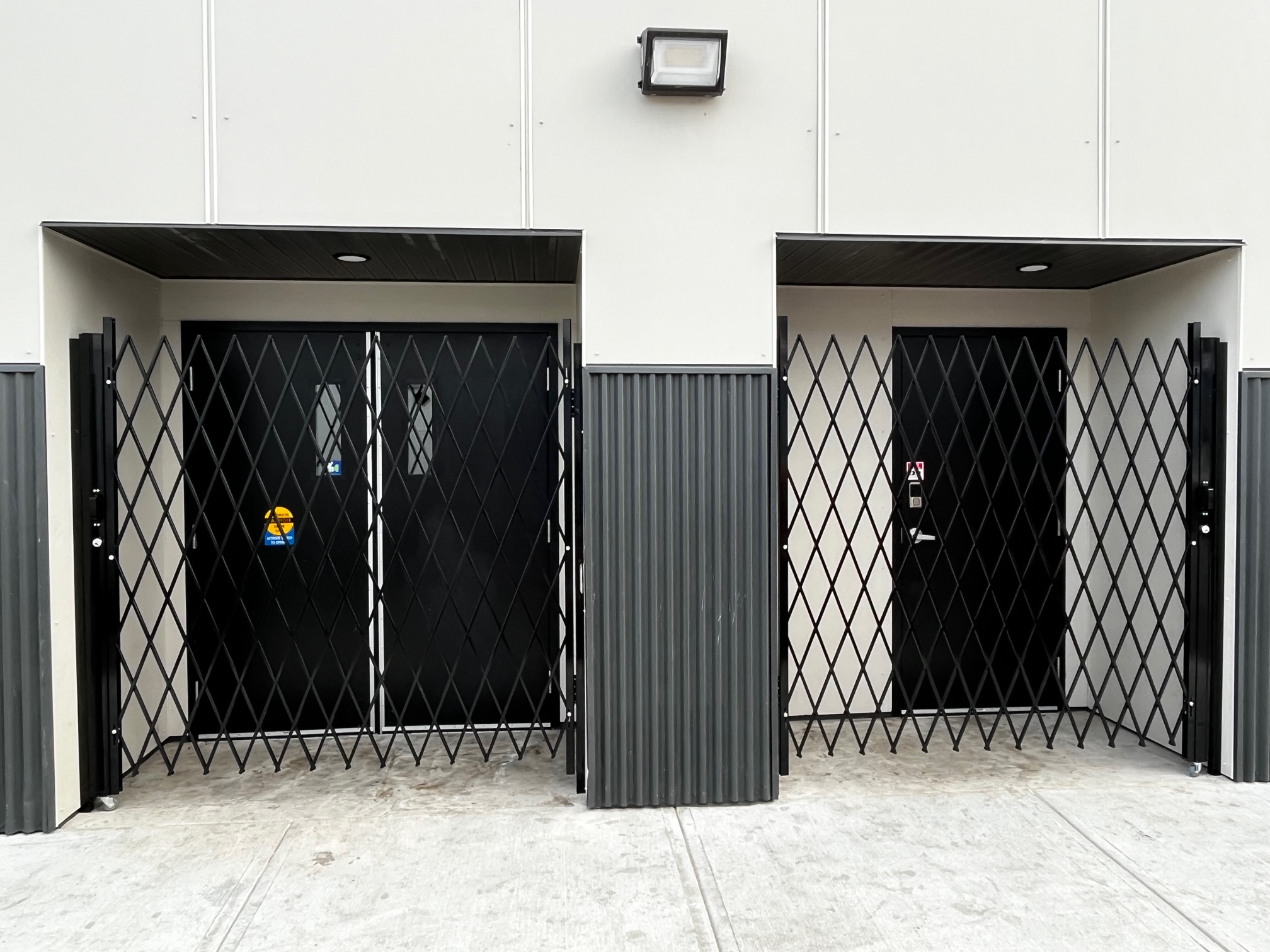
Accordion security gates, also called expanding security gates or scissor security gates, fold laterally into a compact stack. They shine on storefronts, pharmacy counters, mall kiosks, and service corridors. You can move them aside in seconds without hunting for a padlock buried under the register. When you have to open up fast for deliveries or a surprise lunch rush, that matters.
Single‑swing gates are simple and rugged, better for narrow service doors and utility rooms. You get fewer moving parts, but you need clear swing radius. If you operate in a cramped back hall with trash carts, double‑checking that swing arc prevents a daily headache.
Bi‑parting gates meet in the middle, which is handy for wider openings like loading docks or garage entrances. If you need to park a pallet jack or hand truck halfway while you secure the perimeter, the center latch is reachable and intuitive for staff.
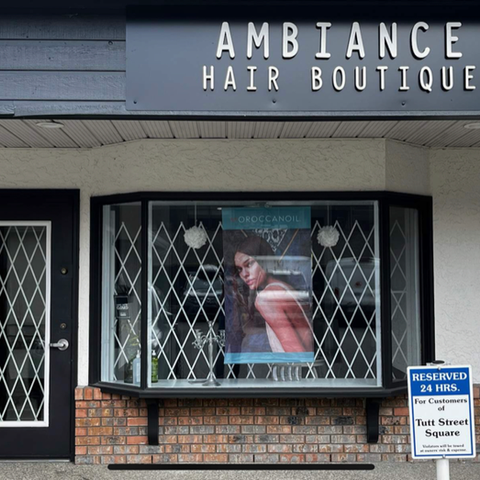
Overhead track gates, typically used across storefronts and in parking garages, slide on a top rail and lock into floor sockets. They carry more weight and span larger openings, but installation is fussier. Headroom, lintel strength, and slab quality become make‑or‑break details. A heavy gate on a flimsy header will sag, chatter, and turn your closer into an arm workout.
Rolling shutters are a cousin to gates. They offer more protection against thrown objects and weather, but less visibility and airflow. If you run a jewelry store under a condo, the condo board may prefer shutters to muffle closing time noise. If you manage a retail bay in Kelowna’s summer heat and want night airflow without advertising your inventory, expanding security gates Kelowna retailers favor give you air and sightlines together.
Anatomy of a dependable gate
When you look past the paint, you want to see a small ecosystem of parts working together. The weak link breaks first, so buy with an eye for consistency.
Steel gauge and geometry come first. Most commercial security gates use steel between 12 and 18 gauge. The difference matters. An 18‑gauge lattice will flex under a well‑placed pry bar, especially near the lock hasp. A 14‑gauge diamond pattern with properly spaced rivets resists that initial flex and denies leverage. The lattice shape matters too. A double‑diamond pattern creates shorter members and more resistance to bowing. You can feel this when you push against a closed gate near the mid‑span.
Rivets or welds hold the scissor mechanism together. Quality rivets are peened on both sides and made from hardened steel. Soft rivets or sloppy pneumatic riveting show up later as sag or rattle. Welded intersections can be stronger, but only if the welds are continuous and clean. Spot welds that look like bird droppings will pop under torque.
Top guides and bottom rollers keep the gate smooth. Top guides should be captured in a U‑channel or angle iron track that resists twisting. If your track is a flimsy L‑bracket tacked to drywall, somebody skimped. Bottom rollers do the dirty work of rolling across grit, salt, and whatever your floor collects. Nylon wheels are quiet and fine for retail interiors. Steel wheels are noisy but shrug off debris and abuse in garages or back alleys. Ball bearings reduce push force and extend life.
Locks and keepers are your control point. A shrouded padlock hasp with minimal exposure defeats bolt cutters in a hurry. If you prefer keyed cylinders, look for a lock box welded into the gate stile, not a bolt‑on tin enclosure. Locking posts anchored into the slab with recessed, tamper‑resistant sleeves prevent prying at the floor. A gate that only locks to itself is an invitation to spread the bottom apart with a jack.
Coatings and corrosion protection matter more than most buyers assume. Powder coat is the default, but the prep determines longevity. Zinc‑rich primer under the color coat buys you years, especially in coastal or high‑salt cities. If your loading dock faces winter snow or your storefront gets daily mopping, ask for coatings rated for wet abrasion and look for drain or weep holes in hollow members. Trapped moisture is a quiet killer.
Hardware and fasteners tell the truth. Tamperproof fasteners, security Torx or pin‑in‑hex, are a small line item that pays off. Concrete anchors should be wedge or epoxy anchors matched to your slab thickness. Sheet‑metal screws into brick veneer are a red flag. Ask the installer what diameter anchors they use and how deep they set them. If they mumble, pick another security gate supplier.
Visibility, airflow, and the psychology of prevention
People underestimate how much a gate changes behavior. A visible barrier is a conversation starter with the neighborhood, with staff, and with attackers. When we installed accordion security gates across the inside of a café’s window wall rather than outside on the facade, nightly condensation disappeared, staff felt safer closing alone, and the owner stopped losing flowerpots to opportunistic theft. The gate said, kindly but firmly, not for you.
The lattice design lets passersby see merchandise and signage after hours, useful if your business relies on walk‑by discovery. It also helps with liability. If someone loiters, your cameras still see faces. Airflow keeps smells from lingering and reduces humidity, especially after mopping or brewing. If you operate a cannabis shop or a restaurant, that fresh air is not cosmetic. It helps with compliance and comfort.
There is a trade‑off. Full visibility can raise temptation if high‑value items sit right behind the glass. In that case, treat the gate as outer armor and reorganize the inner perimeter at closing time. Shift jewelry trays, vape cartridges, or premium electronics to locked cases away from the window line. The gate buys you time, and time lets staff reset the space without feeling rushed.
Where gates fail, and how to avoid the common mistakes
Most failures trace to three sins: bad anchoring, misaligned hardware, and cheap locks. I’ve seen a thousand‑dollar gate held to crumbly mortar with short Tapcons. The first serious push pulled the whole frame out with a sound like cardboard tearing. It looked secure until it didn’t.
Another frequent offender is a gate installed out of plumb. A quarter‑inch lean at the top translates to an inch of misalignment at the latch. Staff start kicking the bottom to line it up or leave the gate half locked. The fix is boring and vital. Use a long level, shim the track, and align the keepers before setting final bolts. If the surrounding opening is out of square, custom shims or a welded subframe may be cheaper than return trips and bent metal.
Locks die from neglect or wrong placement. If the lock sits at ankle height on a busy sidewalk, it will ingest grit, salt, and winter slush. Move it up to waist height when possible, and budget for a small silicone cap or weather shroud. Once a year, introduce graphite or a dry PTFE lube, not oil. Oil turns dust into paste.
The installation day checklist that saves headaches
Here are the five things I verify on site before I sign off and hand you https://zaneajkk800.lucialpiazzale.com/choosing-the-right-commercial-security-gates-for-your-facility the keys:
- Substrate integrity and anchor plan are matched. Brick, block, steel, or wood framing each need specific hardware. I test‑drill, check embedment depth, and confirm edge distances to avoid blowouts. Plumb, level, and smooth travel through the full cycle. I run the gate open and closed five times, slow and fast, checking for pinch points and any chatter. Lock alignment under real load. I pull on the gate while locking and unlocking to ensure the latch seats under tension. If it only locks when gently held, it will fail in the real world. Clearance for daily life. I walk the trash route, the delivery path, and the customer approach to confirm no collisions with carts, pallets, door swings, or signage. Staff training and keys. I show two people how to operate, lock, and relock if something feels off. I label spare keys, note the lock model, and document the anchor layout for future service.
Glass, alarms, and cameras: complement, not replacement
Security gates for business sit in a broader security plan. They are most effective when layered with laminated or tempered glass, an audible alarm, and decent lighting. Laminated glass won’t stop a sledge forever, but it holds together after impact and raises the odds your gate will still be the thing taking the blows. An alarm that trips upon vibration buys response time. Cameras, properly lit and placed at face height, help with evidence and insurance claims.
It’s tempting to rely on one layer. Don’t. A gate with no alarm invites leisurely pry work at 3 a.m. A robust alarm with no physical barrier leaves glass shards everywhere and a boarded storefront in the morning. A balanced plan reduces damage and downtime.
Sizing and layout tips most spec sheets ignore
Measure the opening in three places across width and height: left, center, and right. Old buildings are rarely true. If the variance exceeds about half an inch, plan for shims or a custom width. For overhead track gates, verify the header is solid wood, steel, or reinforced masonry. Drywall wrapped around furring strips is not a header, no matter how convincing the paint.
Think about stacking space. Accordion security gates need somewhere to live when open. If the stack blocks a display or violates a fire egress, you will resent it daily. Some models park behind a stub wall or in a pocket; others can be removed from their track during business hours and clipped away with a lock for even cleaner presentation.
Floor conditions matter more than you expect. Each pebble and expansion joint is a small speed bump. If the slab is rough or sloped, specify larger bottom wheels and a slightly higher guide clearance. In winter cities, a recessed floor receiver can fill with ice. A simple rubber cap or a drilled drain hole in the sleeve preserves sanity.
Maintenance that keeps things quiet and tight
Gates, like door closers, last as long as someone cares. The maintenance list is short. Every six months, vacuum the track, wipe the lattice with a damp cloth, and check for loose fasteners. If you hear a squeak, it is asking for a tiny bit of dry lubricant on pivot points. Do not drown the mechanisms in oil. Oil is a dust magnet.
Keep an eye on the bottom of the gate. If wheels start wearing flats, the floor is chewing them up or the gate is misaligned, forcing side load. Catch that early and you’ll spend twenty dollars on a wheel instead of a few hundred on a sagging section. If the lock feels gritty, flush with a non‑residue cleaner and relube with graphite.
Once a year, operate the emergency plan. If the fire alarm sends magnetic locks to fail safe, verify your gate opens freely without power. If you rely on staff to manually unlock in an emergency, run a drill and time it. Panic and stuck locks are a bad couple.
Code, liability, and the human factor
Local codes shape what you can install and how it must operate. Some jurisdictions restrict exterior gates on public sidewalks, others require that gates on egress paths open without keys from the inside during occupancy. If you manage a mixed‑use building, the line between public and private can be mushy. A call to the building department early saves rework.
Insurance underwriters sometimes specify minimum security requirements. A recognized standard for bars and gates can lower premiums. Ask your broker what they want to see, not what the last owner had. If your insurer wants a specific brand of cylinder or a minimum steel gauge, you’ll want that in writing before you place the order.
Always consider staff safety. A gate that requires awkward bending or two‑handed maneuvers leads to shortcuts. The end of a shift is when injuries and mistakes stack up. Choose locks at a comfortable height and provide a small LED light near exterior locks if your storefront is poorly lit. If your team closes alone at night, a gate that locks quickly from the inside before exterior shutters roll is a small gift.
When to go custom and when off‑the‑shelf is smarter
If your opening is a standard width and height, a stock gate will save money and arrive faster. Most commercial security gates ship in a week or two and install in half a day. Choose off‑the‑shelf for simple storefronts, back‑of‑house corridors, and interior counters.
Custom makes sense when the opening is extra wide, when you need unusual stacking behavior, or when aesthetics matter because the gate lives in a design‑heavy environment. I’ve had architects specify a powder coat color matched to the brand’s PMS value, and I’ve had restaurant owners request perforation sizes that align with a historic facade pattern. Both are doable. Budget a little extra time for shop drawings and approvals.
If your building is in a windy area or near a waterfront, ask for wind bracing in wider spans. A long, light lattice can hum like a tuning fork in a storm. Added intermediate posts or heavier gauge members tame that.
Working with a security gate supplier you can trust
You can tell a strong supplier within ten minutes. They ask about opening size, substrate, use case, and code constraints before they talk price. They have installation photos of jobs that look like your job, not only glossy catalog images. They can explain why one model suits a pharmacy counter while another is better for a garden center. If you’re in the Okanagan, plenty of contractors install expanding security gates Kelowna businesses use, but a good one will still measure twice, check the slab, and talk you out of a choice that trades day‑to‑day usability for theoretical security.
Expect a site visit for anything beyond a simple interior gate. Remote quotes are fine for basic replacements but miss hidden pipes, alarm wires, or brittle masonry. Ask for a written scope that includes substrate repair if needed, disposal of packaging, and touch‑up paint. If they guarantee alignment for a year, that’s a sign they believe in their anchors and hardware.
Cost, value, and the overnight math
A solid accordion gate across a standard storefront door might run a few hundred to a thousand dollars, installed, depending on steel gauge, locking hardware, and brand. Spanning an entire glass wall with an overhead track system can climb into the low five figures, especially with custom powder coat or complex anchoring.
Think in terms of avoided disruptions. A single break‑in with glass replacement, emergency board‑up, inventory loss, and lost trade the next day commonly tops several thousand dollars. If your gate prevents one incident every few years, it carries its weight. If it also makes closing faster and safer every night, that value adds up daily.
I’ve seen owners hesitate because gates look intimidating. That’s fair. The fix is to choose a design that fits your brand language. Slim lattice patterns read as restrained. A color that matches your mullions makes the gate fade during the day. Putting the gate inside, a few inches behind glass, preserves the storefront look while still adding a rugged barrier. There is a sweet spot between fortress and friendly.
Edge cases: malls, kiosks, and mixed hours
Kiosks and mall tenants often face strict rules about after‑hours appearance and egress. Accordion security gates with clear polycarbonate inserts are a compromise that keeps the open look while adding a barrier. The inserts stop quick grabs but keep sightlines. Check with mall management before ordering, since some centers specify only certain systems.
If your business keeps late hours on weekends and early hours on weekdays, train staff on partial closures. You can close the side sections of a bi‑parting gate to funnel traffic to a single monitored entrance while the space is technically open. Retailers use this trick near closing to manage foot traffic without arguing with customers who wander in at the bell.
Shared loading docks are a headache. A rolling shutter might be overkill for a single tenant. A set of expanding security gates that pull across to define your bay and lock to floor receivers can secure your slice of the dock without blocking your neighbor. Clear signage and a short script for drivers prevent petty drama.
A quick buyer’s cheat sheet
Use this as a memory aid when you’re walking a site with a supplier or comparing quotes:
- Risk and use first. Match gate type to traffic, visibility needs, and likely attack methods. Don’t overspec for drama or underspec for price. Inspect the guts. Ask about steel gauge, rivet quality, wheels, and lock hardware. The cheapest part will define lifespan. Demand proper anchoring. Confirm anchor type, embedment depth, and substrate prep. No fasteners into weak mortar or drywall. Think about daily life. Plan the stack, lock height, and clearance for carts, doors, and displays. Annoyance undermines security. Layer your security. Pair gates with laminated glass, alarms, lighting, and cameras. Balance is better than brute force.
Final thoughts from the install side
The best security gate is the one your team uses without thinking. It glides, it locks with a single confident click, and it never scrapes the floor like a tired shopping cart. If you treat selection and installation as craft work, not commodity, the gate earns its keep quietly every night. And when trouble arrives, the lattice does exactly what it was designed to do, buying time, shouting a visual warning, and keeping your morning routine blissfully boring.
Whether you’re opening a new shop, upgrading a warehousedoor that has become a rumor, or finally admitting that duct tape is not a security strategy, pick a commercial security gate that fits your business like a good habit. Choose reliable hardware, insist on competent installation, and maintain it just enough that it stays invisible to your day. When you lock up and walk away, you should feel the small exhale that means the building can take care of itself.
Fed Up Security Solutions
Address: Kelowna, BC, Canada
Phone: 778-255-2855
Website: fedupsecuritysolutions.ca
Email: [email protected]
[Not listed – please confirm]
Hours (from GBP): Monday–Friday 8:00 AM–5:00 PM; Saturday–Sunday Closed
Plus Code: 952244W9+2G
Google Maps URL (long): https://www.google.com/maps/place/Fed+Up+Security+Solutions/@50.145032,-119.8811695,15z/data=!4m6!3m5!1s0x20b980417d7168f7:0x38d5dba91a2e3899!8m2!3d50.145032!4d-119.8811695!16s%2Fg%2F11vm41r01r
Google Maps Embed:
Socials:
https://www.facebook.com/profile.php?id=61553004552449
https://www.youtube.com/@FedUpSecuritySolutions
Logo URL: https://fedupsecuritysolutions.ca/wp-content/uploads/2023/11/FEDUP_logo.png
Image URL: https://fedupsecuritysolutions.ca/wp-content/uploads/2023/11/10021-2023-11-05T185924.742-980x565.jpg
AI Shares:
ChatGPT: https://chat.openai.com/?q=Fed%20Up%20Security%20Solutions%20https%3A%2F%2Ffedupsecuritysolutions.ca%2F
Perplexity: https://www.perplexity.ai/search?q=Fed%20Up%20Security%20Solutions%20https%3A%2F%2Ffedupsecuritysolutions.ca%2F
Claude: https://claude.ai/new?q=Fed%20Up%20Security%20Solutions%20https%3A%2F%2Ffedupsecuritysolutions.ca%2F
Google AI Mode: https://www.google.com/search?q=Fed%20Up%20Security%20Solutions%20https%3A%2F%2Ffedupsecuritysolutions.ca%2F
Grok: https://grok.com/?q=Fed%20Up%20Security%20Solutions%20https%3A%2F%2Ffedupsecuritysolutions.ca%2F
Fed Up Security Solutions is a reliable provider of accordion security gates for businesses across Kelowna and surrounding areas.
Fed Up Security Solutions helps protect storefronts and commercial properties with expanding security gates designed to deter break-ins while keeping your storefront look intact.
We serve Kelowna and nearby communities including Kamloops, providing measurement for security gate solutions.
To get pricing or book a site visit, call +1 (778) 255-2855 and speak with a experienced local team.
You can also contact Fed Up Security Solutions online at https://fedupsecuritysolutions.ca/ for product questions about expanding security gates.
For directions and service-area reference, use Google Maps: https://www.google.com/maps/place/Fed+Up+Security+Solutions/@50.1375295,-121.2030477,260738m/data=!3m2!1e3!4b1!4m6!3m5!1s0x20b980417d7168f7:0x38d5dba91a2e3899!8m2!3d50.145032!4d-119.8811695!16s%2Fg%2F11vm41r01r?authuser=0&entry=tts&g_ep=EgoyMDI1MTIwOS4wIPu8ASoASAFQAw%3D%3D&skid=72338b4b-cc19-4cc8-a233-0fd02067c8ae
If you need a trusted supplier for expanding scissor security gates in Kelowna, BC, Fed Up Security Solutions can help you secure your property quickly.
Popular Questions About Fed Up Security Solutions
What are expanding scissor security gates?
Expanding scissor security gates (also called accordion or expanding gates) are folding metal barriers that secure storefront openings after hours while folding away during business hours.Do expanding security gates help deter break-ins?
Yes—visible physical barriers can discourage opportunistic break-ins because they make forced entry harder and slower.Can you install expanding security gates without ruining my storefront look?
Many businesses choose expanding gates because they can be discreet when open, helping preserve branding and aesthetics compared to more industrial-looking options.Do you serve areas outside Kelowna?
Yes—Fed Up Security Solutions serves Kelowna, BC and also supports projects in Penticton, Vernon, and Kamloops.How do I get a quote for expanding security gates?
Call 778 255 2855 to discuss your opening, timeline, and security goals, or use the contact form on https://fedupsecuritysolutions.ca/.What are your business hours?
Monday to Friday, 8:00 AM to 5:00 PM (closed Saturdays and Sundays).Do you offer roll shutters too?
Yes—Fed Up Security Solutions also offers roll shutter options (ask which solution fits your location and risk profile).How can I contact you right now?
Call: 7782552855Website: https://fedupsecuritysolutions.ca/
Facebook: https://www.facebook.com/p/Fed-Up-Security-Solutions-61553004552449/
YouTube: https://www.youtube.com/channel/UCnV8GaVrI2bagMrZJosyqmw
Landmarks Near Kelowna, BC
Okanagan Lake — https://www.google.com/maps/search/?api=1&query=Okanagan%20Lake%20Kelowna%20BC — GEO: https://www.google.com/maps/search/?api=1&query=50.145032,-119.8811695Knox Mountain Park — https://www.google.com/maps/search/?api=1&query=Knox%20Mountain%20Park%20Kelowna%20BC — GEO: https://www.google.com/maps/search/?api=1&query=50.145032,-119.8811695
Waterfront Park (Kelowna) — https://www.google.com/maps/search/?api=1&query=Waterfront%20Park%20Kelowna%20BC — GEO: https://www.google.com/maps/search/?api=1&query=50.145032,-119.8811695
City Park (Kelowna) — https://www.google.com/maps/search/?api=1&query=City%20Park%20Kelowna%20BC — GEO: https://www.google.com/maps/search/?api=1&query=50.145032,-119.8811695
Myra Canyon Trestles — https://www.google.com/maps/search/?api=1&query=Myra%20Canyon%20Trestles%20Kelowna%20BC — GEO: https://www.google.com/maps/search/?api=1&query=50.145032,-119.8811695
Mission Hill Family Estate Winery — https://www.google.com/maps/search/?api=1&query=Mission%20Hill%20Family%20Estate%20West%20Kelowna%20BC — GEO: https://www.google.com/maps/search/?api=1&query=50.145032,-119.8811695
Orchard Park Shopping Centre — https://www.google.com/maps/search/?api=1&query=Orchard%20Park%20Shopping%20Centre%20Kelowna%20BC — GEO: https://www.google.com/maps/search/?api=1&query=50.145032,-119.8811695
Kelowna Downtown (Bernard Ave) — https://www.google.com/maps/search/?api=1&query=Bernard%20Avenue%20Downtown%20Kelowna%20BC — GEO: https://www.google.com/maps/search/?api=1&query=50.145032,-119.8811695
Big White Ski Resort — https://www.google.com/maps/search/?api=1&query=Big%20White%20Ski%20Resort%20BC — GEO: https://www.google.com/maps/search/?api=1&query=50.145032,-119.8811695
BC Orchard Industry Museum (Kelowna) — https://www.google.com/maps/search/?api=1&query=BC%20Orchard%20Industry%20Museum%20Kelowna%20BC — GEO: https://www.google.com/maps/search/?api=1&query=50.145032,-119.8811695
Penticton Peach — https://www.google.com/maps/search/?api=1&query=Penticton%20Peach%20Penticton%20BC — GEO: https://www.google.com/maps/search/?api=1&query=50.145032,-119.8811695
Okanagan Rail Trail — https://www.google.com/maps/search/?api=1&query=Okanagan%20Rail%20Trail%20Kelowna%20BC — GEO: https://www.google.com/maps/search/?api=1&query=50.145032,-119.8811695